
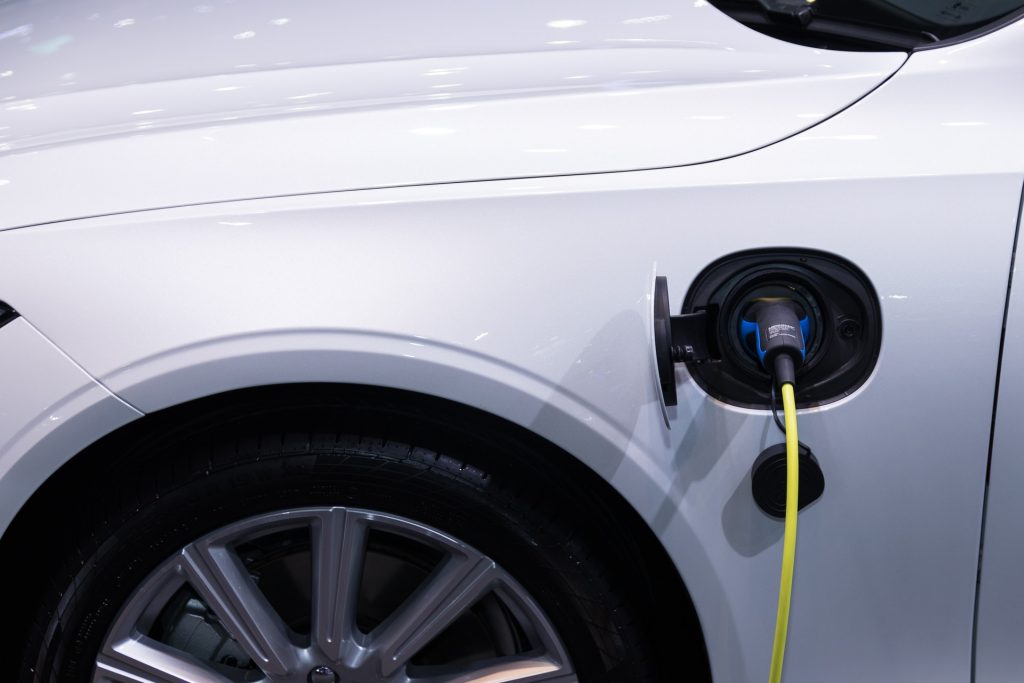
If you follow the automobile industry at all, you have probably heard the term regenerative braking at least a few times. But what is regenerative braking, and why does it always seem to pop up when talking about electric cars or hybrids?
Regenerative braking is a method for turning the energy generated when slowing your vehicle down back into power for an electric car or hybrid’s battery. Basically, it helps recharge your vehicle’s battery while you drive.
In this article, our car experts from Freedom National will answer all of your questions about regenerative braking, including:
- How does this work?
- What are the benefits and downsides of regenerative braking?
- What is a regenerative braking circuit?
- How can I maximize my power?
Let’s talk about what it means for you as a driver.
What is Regenerative Braking?
When it comes to explaining how regenerative braking works, let’s start by talking about what happens in brakes without regenerative braking. And to do that, we first have to talk about physics.
Anyone who’s taken a high-school physics class knows that energy can’t simply be eliminated, it’s only transferred from one place or state to another.
When you brake in a normal vehicle, you’re applying friction to the wheels using the brake pads. That friction causes the wheels to slow down, but the rubbing together of the brake pad and the wheel also generates energy. In a traditional vehicle, that excess energy simply turns into heat. Think about when you rub your hands together to warm them up. In that case, the heat has a purpose— it keeps your hands from getting cold. But in a traditional vehicle, that heat doesn’t have anything to do. It just dissipates.
But this is built on the idea of turning the energy used to stop your car into something with an extra purpose. In some electric vehicles and hybrids, smart vehicle designers have managed to channel that excess energy back to your vehicle’s battery and turn it into electricity, effectively using your brakes to recharge your battery.
So does that mean regenerative brakes use friction like traditional brakes, transferring the energy from friction back into the battery? Not exactly.
How Does It Work?
While traditional brakes use brake pads to create friction with the brake rotors to slow your vehicle or stop it entirely, regenerative braking works a bit differently. Electric and hybrid vehicles have an electric motor, and like most electric motors, these ones can move both forward and backwards. Instead of using friction to slow the wheels, regenerative braking simply involves rotating the motor in the opposite direction, slowing the vehicle or stopping it entirely.
But this reverse rotation generates energy, and regenerative brakes cleverly channel that energy back into the battery as power. Your motor acts as a generator, turning kinetic energy into electricity which your car can then use to power itself further. It’s an amazing little circuit of energy that’s efficient and helps your electric car go longer on a single charge.
So does that mean that electric vehicles don’t use friction brakes at all? Actually, electric vehicles and hybrids use both regenerative braking and friction braking to slow and stop the vehicle. Regenerative braking works just fine in low-speed, stop-and-go situations, but when stopping or slowing down from high speeds, friction brakes are required. However, you can still get the benefits at this time— many vehicles will combine regenerative and friction braking at the same time when stopping or slowing using the friction brakes.
Now that we understand how this works and how it differs from traditional friction brakes, let’s talk about the pros and cons of regenerative braking and what it means for you as a driver and electric vehicle owner.
Benefits of Regenerative Braking
The obvious benefit of regenerative braking is that it reduces wasted energy in your vehicle and allows your battery to last longer on a single charge. Plus, it is activated even when your foot isn’t on the brake pedal and you’re simply coasting. That energy generated when your vehicle is in motion but isn’t being pushed forward by the battery powering the motor is saved and turned back into electricity. In fact, recent figures on the latest electric car models show up to 70% or more of the energy that would otherwise be lost can be recovered thanks to the power of regenerative braking. Over the course of a year, that can add up to hundreds of additional miles of range on your battery, lowering your trips to the charging station or fuel pump if you drive a hybrid.
Regenerative braking can also have an impact on your driving experience. Some EVs and hybrids use this type of braking to allow for a one-pedal drivings system, where instead of using the brake in most situations you can simply let off the gas and the vehicle will slow itself down on its own.
What Are The Cons?
Regenerative braking does have its minor drawbacks. For example, if almost all of your driving is at low speed, such as in a city, your brakes simply won’t be able to generate all that much energy that can be sent back to the battery. Meanwhile, it also requires a bit of a psychological adjustment. They feel a bit different than what you may be used to when gliding to a stop or trying to slow down smoothly.
Finally, regenerative braking on its own doesn’t have the same stopping power as friction brakes, though recent electric car models have mainly solved this issue with concurrent friction and regenerative braking.
Your best bet? Be sure to extensively test drive any EV or hybrid you’re thinking about purchasing, and test the regenerative brakes in a variety of scenarios. You’ll be able to tell whether it’s a minor adjustment you can get used to or a major change that will make your driving experience simply too uncomfortable. The best vehicles make regenerative braking seamless, but not all reach that level of quality implementation.
What is the Regenerative Braking Circuit?
If you’ve ever heard the phrase ‘regenerative braking circuit,’ it’s not as complicated as it seems. This simply refers to the circuit-like path that energy follows as it moves through a vehicle with a regenerative braking system. The energy starts in the battery, which is then converted into motion in the vehicle’s motor. The motor turns the axles, which in turn propel the car forward, generating kinetic energy. While the vehicle is coasting or slowing to a stop, regenerative brakes then transfer some of that energy into moving the motor in reverse, slowing the vehicle, which in turn sends kinetic energy back to the battery where it’s converted back into electric energy, where the process begins all over again. This is the circuit in an electric car or hybrid.
How to Maximize Regenerative Braking
Strangely enough, the best way to maximize the energy generated by regenerative braking and sent back to your battery is to brake less. Remember— it’s not the friction brakes charging your battery, it’s the regenerative brakes, which don’t require your foot to be on the gas pedal.
Instead of driving full-speed until just before a stop and then slamming on your brakes, practice coasting to a stop from a further distance away. The longer your coast, the more time your regenerative brakes have to do their work. That’s the best way to maximize the efficiency of your system and extend the range of your battery.
Conclusion
At Freedom National, we’re here to help get you insured regardless of what kind of vehicle you drive or brakes you use. Visit our quote page to get a fast online quote and find the perfect insurance offer based on your unique needs. We even offer people with negative driving records or who require SR-22s the chance to get insurance coverage that won’t break the bank. No matter who you are, our mission is to help you get the coverage you need at a price you can afford— whether you drive an electric vehicle or not.
It’s all here at Freedom National, the best and fastest place to get cheap car insurance online.


