
Buying an electric vehicle for the very first time is exciting, but it can also be a bit anxiety-inducing. After all, most of our lifetimes have been spent driving the same type of car— a gas-powered vehicle of one type or another. A battery-powered vehicle can seem so foreign that you may not be sure exactly what’s required to keep it running.
You’re not the first person to wonder how to maintain an electric car properly, particularly if you’re concerned with protecting your investment. But don’t panic— the good news is that maintaining an electric car isn’t more complicated than a traditional vehicle. In fact, the answer to how to maintain an electric car is far simpler than you might expect.
In this guide from Freedom National, we’ll cover all of the basics of electric car maintenance, including how to do it, what you’ll need, and how much you can expect to spend for electric car maintenance over the course of your vehicle’s lifetime. Let’s get started!
Do Electric Vehicles Require More Maintenance?
Because they seem so futuristic and cutting-edge, many new electric vehicle drivers fear that their car requires extensive maintenance in order to keep running properly. After all, hasn’t it always seemed that the more advanced the technology, the more work is required to keep it operating at peak performance?
Well, good news for electric car owners— electric vehicle maintenance is far simpler than maintenance for vehicles that use internal combustion engines. The main reason for this is that while an internal combustion engine has dozens of moving parts and pieces, an electric vehicle battery has just two. That means less parts that can wear, become damaged, or fail.
That said, electric vehicles aren’t entirely maintenance free. You can extend the life of your vehicle and keep you safe by learning how to maintain an electric car the right way.
Electric Vehicle Maintenance Schedule
Looking for a basic outline for how best to maintain your electric vehicle over the years? Here’s an excellent checklist from www.MyEV.com that’s a great starting point. Just keep in mind that your own personal maintenance schedule may be different depending on the make, model, and usage of your electric car. And remember, you don’t have to check these elements yourself if your feel more comfortable having a trained mechanic examine them.
Monthly
Check and adjust tire pressure, check tires for wear, and refill windshield wiper fluid if necessary
Every 7,500 Miles
Have tires rotated, check coolant level for battery, cabin heater, power inverter, accessory power, and charger modules. Check for fluid leaks. Inspect brakes. Inspect steering, suspension, and chassis for damage. Inspect power steering, halfshafts, and drive shafts for wear or damage. Check airbag and restraint system. Lubricate body components. Check accelerator pedal. Inspect gas struts. Check tire sealant if applicable.
Twice a year
Flush corrosive materials (i.e. road salt) from the underbody using plain water.
Every 15,000 miles
Replace the windshield wiper blades.
Every 36,000 miles
Replace the cabin air filter (more frequently if necessary).
Every 75,000 miles
Replace the hood and/or body lift support gas struts.
Every five years
Drain and fill the vehicle coolant circuits. Replace the brake fluid.
Every seven years
Have the air conditioning desiccant changed.
Do You Need to Take Your Electric Vehicle to a Special Mechanic?
Most longtime mechanics are most experienced with vehicles that have internal combustion engines, considering that for the last century that’s been just about the only kind of vehicle that exists.
For this reason, your best bet may be to take your electric vehicle directly to a dealership for servicing. While dealership mechanics tend to charge more than independent businesses, they’ll be the most experienced and equipped to inspect and repair your electric vehicle. That said, electric vehicle inspections, maintenance, and repairs tend to be so inexpensive that even dealership rates for most issues shouldn’t set you back too much cash.
Tips for Electric Vehicle Maintenance
If you’re looking for additional info about how to maintain an electric car, we’ve gathered some of the best tips and answers to common questions about electric vehicle maintenance. In this section, we’ll address everything from oil changes and battery basics to how you can improve the quality of your experience with your electric vehicle. Remember, just because your vehicle doesn’t have a combustion engine doesn’t mean that other parts and elements of the car can’t fail and cause unsafe conditions. Always keep up regular maintenance and inspections for your electric car, and follow the tips we outline in the sections below.
You Don’t Need Regular Oil Changes
That’s right— the most common hassle of car ownership, the oil change, will become a thing of the past once you make the switch from gas-powered to electric. Motor oil is used to lubricate all of those moving parts in internal combustion engines we mentioned earlier. But a battery-powered vehicle doesn’t have all of those moving parts, and so motor oil as lubricant is no longer necessary. That means no more oil changes every few months or after a set amount of miles driven on your vehicle. If you’re one of the many people that hates spending $50+ at a mechanic or a few hours changing their own oil every few months, then you will enjoy this advantage that owning an electric vehicle brings.
Your Car’s Battery is It’s Most Important and Expensive Component
Remember when we mentioned that almost all repairs and replacements for components of your electric vehicle are relatively cheap? Well, that doesn’t apply to your battery. In the same way that the engine itself is the most important component of a gas-powered vehicle, your electric car’s battery is the single most important and expensive component of your electric car. That means damage or failure of the battery will be costly to repair or have replaced. That’s why it’s important to treat your battery with care— only charging it when necessary, avoiding putting it under unnecessary stress through frequent fast acceleration, etc.
Get a Home Car Charger If You Can
While public charging stations are becoming more and more common, they’re still not as ubiquitous as gas stations for filling up your vehicle’s chosen source of fuel. While you can charge your vehicle using a simple household wall outlet, this will take a long time— often an entire night or longer depending on how depleted your battery is and its maximum capacity.
One way to improve on this is buy purchasing an at-home Level 2 charger, which can charge your vehicle as much as 10x faster than a standard outlet. However, the price of at-home charging stations can stretch into the thousands, so it is definitely a significant investment.
Electric Car Brakes Don’t Need to be Replaced as Frequently
Brakes are one of the most frequent components to fail in a vehicle, so you’ll be pleased to learn that the brakes in most electric vehicles last far longer than those in their gas-powered counterparts. In fact, brakes in electric vehicles can usually last well over 100,000 miles before needing to be replaced. Some drivers have even reported brakes stretching past the 200,000 mile point. Now that’s what we call low-maintenance.
Part of the reason for this brake longevity is that in addition to traditional friction brakes, electric vehicles also feature regenerative brakes. These are used to help put energy into the battery whenever the vehicle is brought to a stop. Think of it as your vehicle’s motor acting as a kinetic energy generator which sends electricity into the battery.
Because electric vehicles with regen braking essentially split braking duties across two brake systems, the wear and tear on your friction brakes is greatly reduced.
Treat Your Tires the Same Regardless of Your Vehicle Type
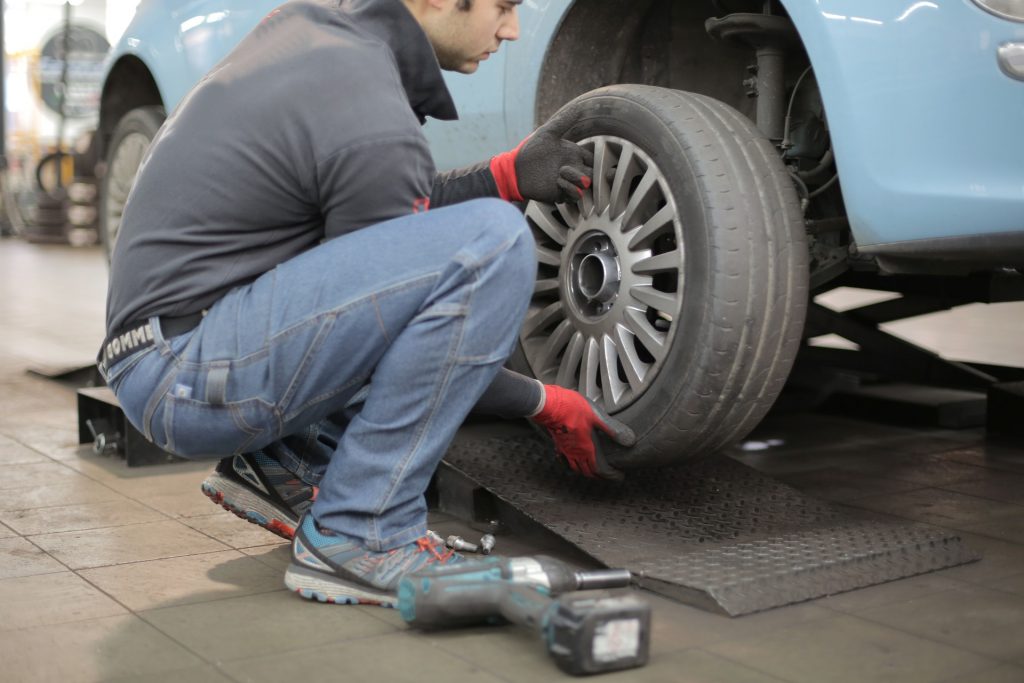
There is one area in which electric vehicle and gas-powered vehicle maintenance are the same— tires. Your tires won’t wear out any less just because you’re in an electric vehicle, so be sure to regularly inspect them for unsafe levels of wear. If the tread is starting to wear thin or go bald, it’s time to replace your tires with a new set to keep you safe on the road. Don’t forget to rotate tires regularly, as well. This ensures that they wear out evenly, as unevenly worn tires can lead to serious problems and unsafe driving conditions.
Conclusion
Maintaining your electric car over time should generally be a low-stress, far less expensive experience than an equivalent gas-powered vehicle. Just remember to treat your car with respect, drive smart, and keep up with required maintenance. And don’t forget to get your vehicle insured. At Freedom National, getting a free quote and signing up for an inexpensive policy is every bit as stress-free as maintaining a quality electric vehicle. Get started with your free quote today!


