
Electric vehicles have been around for a few years now, but they’re still an extremely cutting-edge technology that’s constantly evolving and being pushed forward by innovative companies such as Tesla and others.
But have you ever wondered exactly how electric cars work? We’ve had electricity for over a century, so why are electric vehicles just now coming into widespread use?
In this article from our team of car experts at Freedom National, we’ll explore how electric cars work, what sets them apart from hybrids, and gas-powered vehicles, and the components that make up an electric car and help it work. We’ll also cover the types of electric current used to charge electric cars, maintenance basics for EVs, and whether there are different types of motors found in electric vehicles.
Looking to insure your electric car? Freedom National offers free quotes you can get online in just minutes, getting you signed up with a policy that’s affordable and tailored to your unique needs. Then you can get on the road with the safety and security that comes from knowing you’re covered no matter what life throws at you. You can also read about the many advantages and disadvantages of electric vehicles.
Electric Cars vs. Gas-Powered Cars: The Basics
Gas-powered cars use internal combustion engines to propel them forward. Basically, gasoline acts as fuel to power tiny, constant explosions inside your engine. The energy generated from these explosions (or combustion) is transferred to the motion of your vehicle, propelling it forward. Because of this design, internal combustion engines featured dozens of moving parts, from pistons and gear shafts to all of the tiny little components that make it all come together.
Electric cars use only a large battery to power the engine— no gasoline whatsoever. The first fully electric vehicle that was mass-produced and highway legal was the Tesla Roadster, which cost $100,000. Since then, the technology associated with electrically powered vehicles has advanced to the point that electric cars cost less and can do more than ever before— in many cases, matching or exceeding gas-powered vehicles in overall performance.
How do electric cars work? Electric cars work through induction. A lithium ion battery turns a crank as you drive, which then turns gears that are connected to the rods which turn your vehicle’s wheels. There are no pistons, no cylinders, and no internal combustion in fully electric vehicles. And whereas traditional internal combustion engines have hundreds of moving parts, an electric vehicle’s motor has just two. Overall, this makes them four times more energy efficient than gas-powered vehicles.
Components of Electric Cars
The average gas-powered vehicle contains somewhere in the vicinity of 2,000 individual moving parts. The average electric vehicle? Roughly 30-40. That’s a significant difference that shows up in spades when it comes to maintenance and repair costs. There are simply less components that can break down, wear out, or fail and need replacement or repair. In fact, that’s one of the most enticing parts of owning an electric car for many owners— the significantly low maintenance required to keep them running and in good condition.
That said, electric cars do have a few key components that you’ll want to be familiar with, even if they’re less likely to fail than their gas-powered counterparts. Here are some of the most important components of an electric car.
Battery
The most important (and expensive) component of your vehicle is the battery. However, the word ‘battery’ is actually a misnomer, because electric vehicles actually feature a series of smaller lithium-ion batteries, known as modules, with each of these modules made up of individual battery cells— each one roughly the size of a single AAA battery.
These battery modules are linked together in circuits that work together to deliver electricity from the battery to the vehicle’s motor.
Motor
The motor in your electric vehicle has a pretty specific job— turn electricity into mechanical energy, or motion. The process goes like this— your battery produces an electric charge, which is then sent to a nonmoving element of the motor called a stator. This creates a magnetic field, which then turns a rotating component of your motor called the rotor. As this rotor spins, it generates the energy necessary to spin the vehicle’s wheels and propel the car forward using just one gear.
The more you step on the ‘gas’ pedal, the more electricity is generated in the battery, and the more quickly that rotor will spin, making your car accelerate.
Note— there are no gears in electric vehicles. As a result, transitioning between various speeds is a completely smooth experience, something many EV fans love most about their cars.
Inverter
There are two types of electric currents— alternating current and direct current. Alternating currents can move in both directions along a circuit, while direct currents can only move in one direction.
Inside every electric vehicle is an inverter, which turns the DC electricity stored inside a battery to the AC electricity required to power the motor. This small but important component is located between your battery and motor.
Brakes
In addition to traditional friction brakes, electric vehicles also feature regenerative brakes. These are used to help put energy into the battery whenever the vehicle is brought to a stop. Think of it as your vehicle’s motor acting as a kinetic energy generator which sends electricity into the battery.
Because electric vehicles with regen braking essentially split braking duties across two brake systems, the wear and tear on your friction brakes is greatly reduced.
Charging an Electric Vehicle Battery
How do electric cars work when it comes to recharging their batteries? After all, we’re all familiar with the constant need to refill a gas-powered engine with gasoline. So how do we ‘gas up’ a vehicle that doesn’t use gasoline?
Many people think that charging an electric car requires some special sort of expensive equipment you can only find at certain spots around the country. However, this is only partially true.
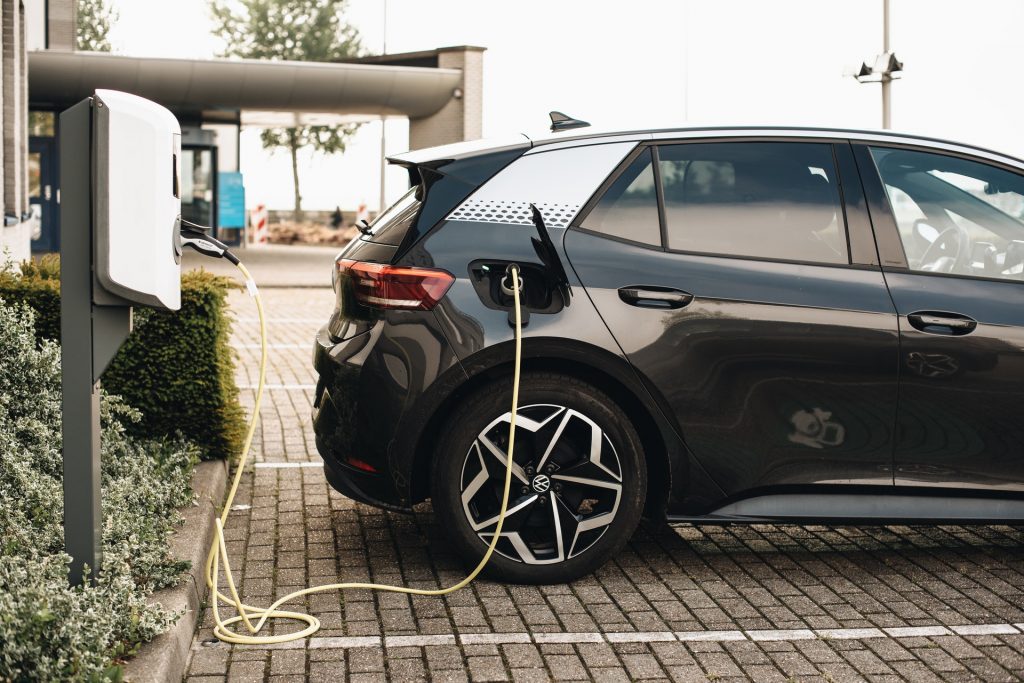
The simplest way to charge an electric vehicle battery is by plugging it directly into a wall outlet in your home. This is known as Level 1 charging, and is possible with nearly all electric vehicles. But there is a catch. Charging this way takes a significantly long time, providing just 3-5 miles of driving distance per hour of charge.
Meanwhile, Level 2 charging requires a special charging station but can more than triple the charging speed. Level 2 chargers are the standard in public places and when people purchase charging stations for their homes.
You may also find Level 3 charging stations, though these are less common. These are capable of charging electric car batteries at blazing speeds— providing up to 150 miles of driving distance in just 30 minutes.
Repairs & Maintenance
Many new electric vehicle drivers worry that their car requires extensive maintenance in order to keep running properly. After all, hasn’t it always been the case that the more advanced the technology, the more work is required to keep it operating at peak performance?
Well, good news for electric car owners— electric vehicle maintenance is far simpler than maintenance for vehicles that use internal combustion engines. The main reason for this is that while an internal combustion engine has dozens of moving parts and pieces, an electric vehicle battery has just two. That means less parts that can wear, become damaged, or fail.
That said, electric vehicles aren’t entirely maintenance free. You can extend the life of your vehicle and keep you safe by learning how to maintain an electric car the right way. For example, tires wear out on electric cars just as they do on gas-powered ones. Always keep up a regular schedule of tire rotation, and bring your vehicle in for routine inspections periodically over the course of the vehicle’s lifetime. This will help you catch any potential issues before they become costly or potentially dangerous.
Conclusion
We hope this has been a helpful primer about the ins and outs of electric vehicles. At Freedom National, we’re huge supporters of finding ways to reduce environmental impact— and thanks to the massive influx of stylish, powerful, and safe electric vehicles, you don’t have to pick between responsible choices and enjoyable driving. You can have both!
At Freedom National, we’re here to help get you insured regardless of what kind of vehicle you drive. Visit our quote page to get a fast online quote and find the perfect insurance offer based on your unique needs. We even offer people with negative driving records or who require SR-22s the chance to get insurance coverage that won’t break the bank. No matter who you are, our mission is to help you get the coverage you need at a price you can afford— whether you drive an electric vehicle or not.
It’s all here at Freedom National, the best and fastest place to get cheap car insurance online.


